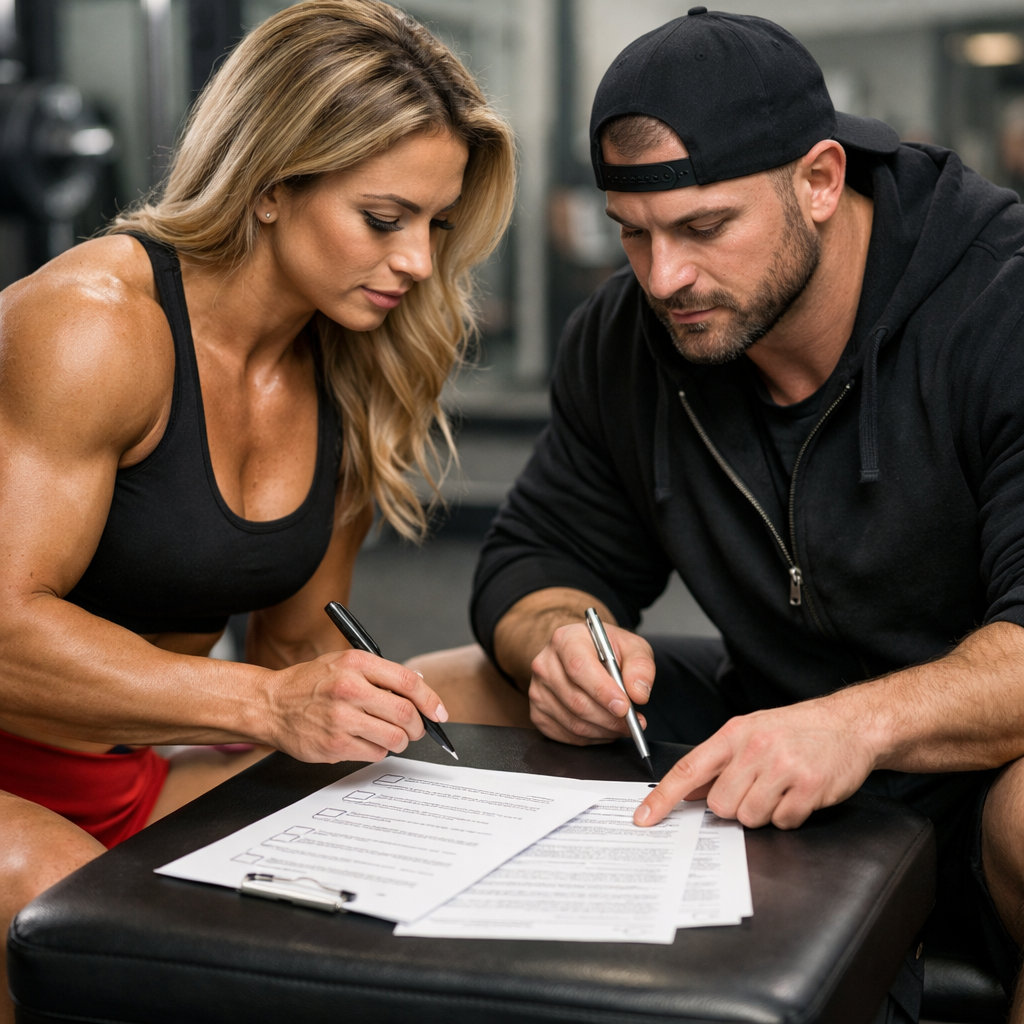
Avoid Costly Mistakes Selecting Bodybuilding Gyms and Competition Prep Coaches
Choosing the right bodybuilding gym and contest prep coach can save you months of frustration, thousands of dollars, and a shot at your best stage day. This FitnessJudge guide gives you a protective, step-by-step framework to identify a bodybuilding-ready health club, vet a contest prep coach for your division, and lock in clear terms that protect your time, money, and data. You’ll build a focused shortlist, verify equipment and culture in person, assess coaching outcomes and communication, run a bounded trial, and finalize contracts with true-cost and safety checks. Done right, you’ll match a competitive bodybuilding setup, evidence-based programming, and a coach who communicates at the cadence you need—without hidden fees or rigid contracts.
Define your competition goal and timeline
Competition prep is a structured period (usually weeks to months) of training, nutrition, posing, and recovery designed to achieve stage condition for a specific division. It aligns goals, timelines, and coaching processes to minimize muscle loss and maximize presentation.
Back into timing from your current condition, division standards, and show date. Evidence-based pacing targets roughly 1–2 pounds per week of weight loss or 0.5–1% body-fat reduction to preserve skeletal muscle, as outlined in NASM’s competition-ready guidance (see NASM’s coaching overview). Starting prep too aggressively can accelerate muscle loss and drive unfavorable metabolic adaptations; a slower, data-driven cut is safer and more sustainable (see Body Centre’s discussion of extreme dieting risks).
Starting lean shortens the time you must spend in a deficit—reducing fatigue and protecting strength—while higher starting body fat demands longer, more conservative timelines with extra runway for plateaus (see The Bodybuilding Dietitians’ smart prep planning).
Build a shortlist with the FitnessJudge framework
Use a data-first shortlist that balances fit, reliability, total cost, and safety for both gyms and coaches. Cap each list at 3–5 options. Require at least one in-person audit and one trial membership or trial coaching period per finalist. Score each criterion 1–5 with brief notes. Start with FitnessJudge’s 1–5 scoring template to reduce bias and keep decisions comparable.
| Option | Fit-to-goal (division, equipment, posing) | Reliability (uptime, responsiveness, reviews) | True cost (membership/sessions/hidden fees) | Safety (policies, certifications, insurance) |
|---|---|---|---|---|
| Gym/Coach A | ||||
| Gym/Coach B | ||||
| Gym/Coach C |
Use the FitnessJudge tools hub for a true-cost calculator and reliability check (see FitnessJudge tools hub).
Audit gyms in person for bodybuilding readiness
Visit the gym yourself—photos and ads are often misleading, and only an in-person audit reveals real crowding, cleanliness, and equipment access (see Gym Mikolo’s gym-choosing guide). Go at both peak and off-peak times to stress-test equipment availability and turnover. Confirm the commute fits your routine; consistency drops when travel is long or inconvenient. Log findings against your FitnessJudge shortlist scores to keep comparisons objective.
Equipment, space, and policies checklist
- Equipment breadth for progressive overload: multiple squat/power racks with safety arms, full-length 7-foot barbells and lighter technique bars, and dumbbells extending at least to 25 kg (55 lb). Platforms, benches, and plenty of plates reduce wait times (see Strength Revolution’s gym selection guide).
- Policies that support serious bodybuilding: chalk allowed for secure heavy grips; filming permitted for technique review and coach feedback (see Strength Revolution’s gym selection guide).
- Space and support: a clear posing area or reservable studio; ask whether the bodybuilding gym hosts physique events or employs trainers with physique/contest prep experience (reinforced by Gym Mikolo’s gym-choosing guide).
Culture, community, and scheduling checks
- Observe etiquette and seriousness: Do competitors train here? Are staff supportive of prep discipline and posing coaching?
- Test a trial day or week to feel equipment turnover and atmosphere before joining (advised by Gym Mikolo).
- Map your schedule to their busy times. If your window doesn’t reliably grant access to racks, cables, or platforms, cross it off.
Hidden costs and contract terms
- Itemize everything: enrollment fee, annual maintenance fee, towel/locker fees, class/posing room rentals, guest passes, upgrade fees, cancellation penalties, and early-termination clauses.
- A hidden fee is any cost not clearly disclosed upfront, such as maintenance, cancellation, upgrade, booking, or processing charges, that increases your total spend beyond the advertised price. Itemize these charges before signup to avoid paying more than the posted monthly rate in every month.
- Compare base vs. true monthly cost (include commute/time):
| Gym | Base price | Fees/add-ons (monthly equivalent) | Commute cost estimate | True monthly cost |
|---|---|---|---|---|
| Gym A | $49 | $18 | $22 | $89 |
| Gym B | $79 | $0 | $12 | $91 |
| Gym C | $39 | $25 | $35 | $99 |
Vet coach credentials and division-specific experience
Require a visible bio and formal basics (CPR/first aid and nutrition education), but prioritize competition-specific outcomes in your division and federation over price or personality (see Autumn Cleveland’s coach selection guidance). Strong coaches evaluate your current condition, body composition, division standards, and time needed before accepting you (see NASM’s coaching overview). FitnessJudge’s criteria weight division outcomes and reliability so you don’t overvalue charisma or low price.
A competition prep coach designs and adjusts training, nutrition, posing, and peak-week strategies for physique athletes. The best coaches demonstrate division-specific results, manage realistic timelines, communicate expectations clearly, and individualize plans to the athlete’s drug-tested or untested context, ensuring stage condition while safeguarding health, recovery, and compliance through oversight.
Evidence of outcomes and athlete fit
- Ask for anonymized progress logs, stage photos, or outcome summaries. Beware coaches who sell their own physique instead of coaching outcomes (see Travis Wade’s trainer vetting tips).
- Contact multiple past clients. Repeated, similar complaints signal reliability issues (reinforced by Autumn Cleveland’s guidance).
- Favor coaches with documented weekly check-ins who explain the “why” behind changes and provide clear expectations (see Five Starr Physique’s coaching process).
Nutrition, supplementation, and drug-tested context
- Expect evidence-based nutrition with reasonable constraints; avoid extreme or unnecessarily restrictive protocols unless clinically indicated (see Body Centre’s discussion of extreme dieting risks).
- Confirm comfort with drug-tested divisions versus untested contexts, supplementation safety, and disclosure requirements for your federation. Get written guidance on permitted substances.
- Agree on a realistic fat-loss pace (~1–2 pounds/week or 0.5–1% body fat/week) to protect muscle. Faster is rarely better during competition prep.
Probe coaching process, caseload, and communication
Request a sample week showing your training split, nutrition targets, and check-in cadence. Ask how many total clients they manage and the maximum number of concurrent competitors per season. Confirm what data you’ll provide (weight, photos, measurements, training logs, sleep/stress) and how decisions are made from those inputs (see Five Starr Physique’s coaching process and Travis Wade’s process clarity advice). Set response-time SLAs for messages, especially around peak week.
Program design, data tracking, and check-in cadence
- Expect weekly check-ins with clear explanations for adjustments (see Five Starr Physique’s coaching process).
- Discuss recovery safeguards during deficits: deloads, sleep targets, step caps, and session caps to avoid overtraining (supported by Body Centre’s notes on over-restriction and fatigue).
- Align on progression methods beyond load—reps, sets, tempo, range, and volume—and how stalls or regressions are handled.
Technique review, posing, and show-day support
- Ensure form oversight: video technique review or scheduled form checks. Confirm whether posing coaching is included and how often to practice; strong posing materially affects stage presentation (noted in Body Centre’s guidance).
- Validate a show-day plan: pump-up timing, meals, posing run-throughs, and contingencies.
- Clarify peak-week strategy, including water, sodium, and carbohydrate manipulation, with a rationale and fail-safes (see Body Centre’s peak-week overview).
Run a trial and verify references
Use a 1–4 week coaching trial to test communication, adherence, and progress signals. Many gyms offer trial membership day/week passes to validate crowding and culture before committing (see Gym Mikolo). Track responsiveness against stated SLAs, the quality of feedback, and how plans are personalized. Score trials on your FitnessJudge shortlist to keep pass/fail decisions consistent.
Trial week protocol and performance signals
- Day 1: Onboarding and goal alignment; provide baseline data and recent training footage.
- By 72 hours: First check-in with initial tweaks based on data and form review.
- Days 4–6: Monitor adherence, recovery, and progression; log questions and coach responses.
- End of week: Debrief with next steps, adjustments, and timeline recalibration.
Positive signals: timely replies, data-informed tweaks, clear rationale, safe progressions. Negative signals: cookie-cutter plans, slow or vague feedback, no technique review. Score each area 1–5; continue only if the average is 4 or higher.
Reference checks and pattern spotting
- Speak with 3–5 past clients across divisions and experience levels; ask about responsiveness, injury management, and stage outcomes.
- Watch for repeated patterns of negligence or control issues—consistent patterns are red flags (echoed by Autumn Cleveland).
- Where possible, cross-check testimonials against public stage results.
Finalize contracts and contingency planning
Lock terms in writing: scope of service, deliverables, check-in cadence, response SLAs, fees, start/end dates, and reschedule/cancellation policies. Verify insurance and safety procedures; professional coaches plan for accidents and client safety (see Travis Wade’s guidance on professional standards). Use the FitnessJudge true-cost calculator to model the full year before you sign.
Fees, refunds, and scope of service
- Itemize what’s included versus extra: monthly coaching fee, posing sessions, peak-week intensives, show-day support, travel/day rates, and add-on lab or body-composition testing. Capture your refund policy and termination rules (notice periods, partial refunds), session expiration windows, and escalation paths for unresponsiveness.
Annualized true-cost view (example):
| Item | Unit cost | Frequency | Annualized cost | Notes |
|---|---|---|---|---|
| Coaching retainer | $249 | Monthly | $2,988 | Includes weekly check-ins |
| Posing coaching | $60 | 2x/month (prep months) | $720 | 6 months prep |
| Peak-week intensive | $300 | Once | $300 | Final week |
| Show-day support | $400 | Per show | $400 | Local show |
| Lab/body-comp testing | $120 | Quarterly | $480 | DEXA or labs |
| Travel/day rate | $0–$600 | As needed | Varies | Budget buffer |
Peak week, post-show recovery, and injury procedures
- Peak week: require precise, evidence-backed plans for water, sodium, and carbohydrate manipulation with clear criteria for changes (see Body Centre’s peak-week overview).
- Post-show: agree on a recovery blueprint before stage day. Use gradual reverse dieting to restore energy availability and training performance while limiting rapid fat regain (supported by Body Centre’s notes on rebound management).
- Injury/illness: document communication channels, medical referrals, session pauses/credits, and insurance coverage.
Payment and data protection practices
- Pay via secure processors. Avoid storing card details with coaches lacking encryption or PCI-compliant systems. Prefer month-to-month with capped auto-renewals and an explicit refund policy.
- Limit shared data to necessary metrics (training logs, nutrition, photos). Request data retention/deletion timelines and written privacy practices.
- Use virtual card numbers and disable autopay immediately if service lapses.
Quick red flags to avoid
- No evidence of client outcomes or process; overloaded coach with slow check-ins; guarantees of wins or one-size-fits-all diets.
- Gyms banning chalk/filming, lacking adequate racks/platforms, or refusing in-person audits.
- Aggressive deficits without rationale; no post-show plan; poor recovery monitoring.
Frequently asked questions
What is the biggest mistake people make when choosing a gym or prep coach?
Choosing based on price or charisma instead of proven outcomes, equipment readiness, and contract clarity. Use the FitnessJudge framework to verify results, audit in person, and lock transparent terms.
How can I match a coach’s style to my division and experience level?
Request division-specific case studies, weekly check-in examples, and how they adjust for your drug-tested context. FitnessJudge’s checklist keeps the focus on coaches who have successfully prepped athletes like you.
What gym features matter most for progressive overload and bodybuilding?
Multiple racks with safety arms, full-size barbells, a wide dumbbell range, chalk and filming permissions, and a clear posing area. FitnessJudge’s in-gym audit keeps these priorities front and center.
How do I avoid hidden fees and rigid contracts?
Get an itemized total cost, including enrollment, annual, locker, posing room, and cancellation fees. Model the true monthly and annual spend with FitnessJudge’s calculator and prefer month-to-month or reasonable termination clauses.
How long should a realistic competition prep take?
Estimate using a 1–2 pounds/week or 0.5–1% body-fat loss pace, adding buffer for plateaus and peak week. FitnessJudge’s pacing guidance helps set a realistic timeline based on your starting point.