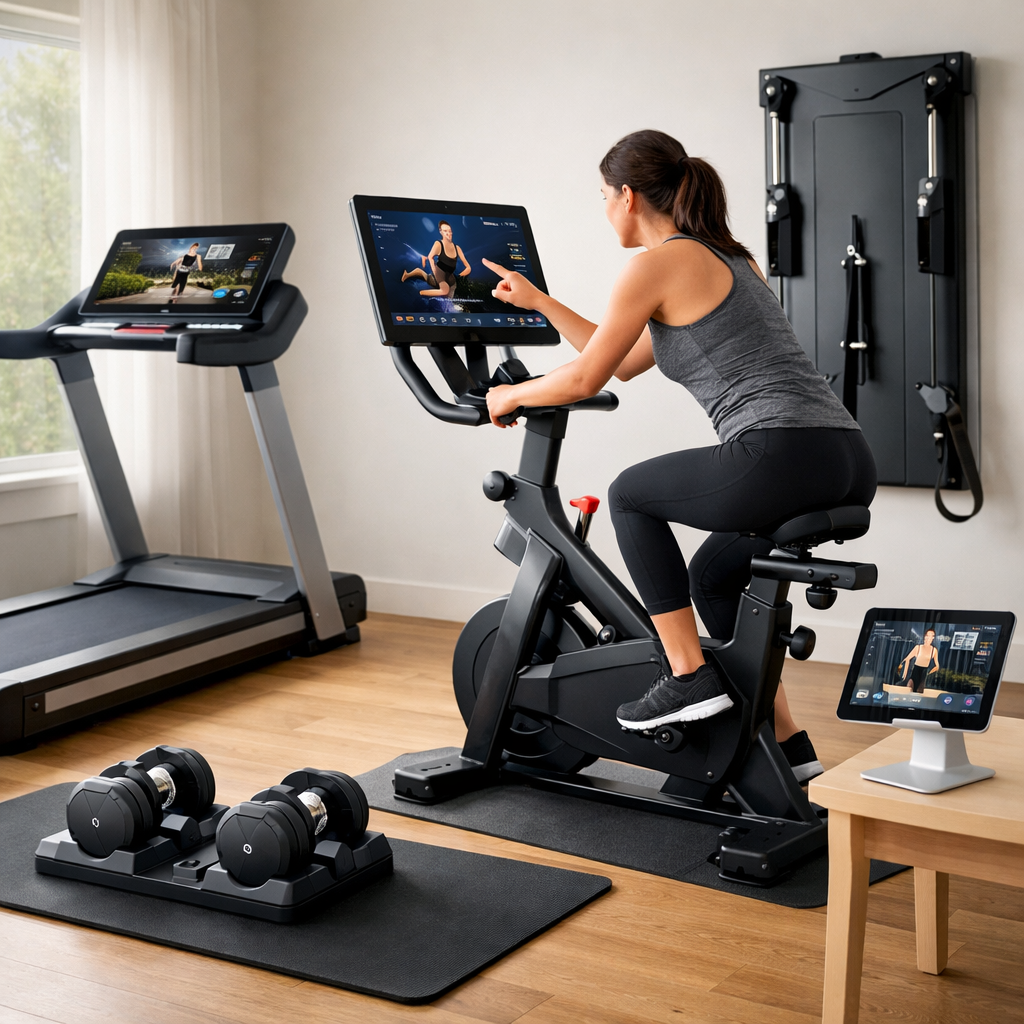
Best Connected Home Gym Equipment: Expert Picks For Smarter Training
The best connected home gym equipment matches your goals, space, and budget—while keeping you engaged with measurable progress. Below, our experts share the top picks by modality (strength, cardio, hybrid), spell out trade‑offs, and give you clear total cost and setup guidance. A connected home gym is fitness hardware with built‑in software—touchscreens, sensors, or AI—that delivers guided classes, performance tracking, and sometimes auto‑adjusting resistance. These systems aim to replace classes or personal training at home with measurable progression and community features.
At a glance comparison (prices and specs cross‑checked against independent testing and major roundups, including BarBend’s latest smart gym guide):
- Data sources for multiple rows validated against BarBend’s smart gym roundup (prices, resistance figures, footprints) BarBend testing and picks.
| Pick | Price (USD) | Footprint / Mount | Resistance range | Subscription need | Standout features | Integrations | Warranty basics |
|---|---|---|---|---|---|---|---|
| Tonal 2 (digital weight machine) | $4,295 | Wall‑mounted | Up to 200–250 lb (electromagnetic) | Required for full features | AI coaching, adaptive resistance, form feedback | Varies by app ecosystem | Limited parts/labor; in‑home install |
| Tempo Studio (free weights + AI) | ≈ $1,680 (Studio Lite) | Cabinet footprint | Plate‑based (progress via plates) | Required for full classes | 3D motion tracking, tidy storage | Varies by app ecosystem | Limited parts/labor |
| Peloton Bike / Bike+ (cycling) | Varies by model | Bike footprint with wheels | N/A (magnetic flywheel) | Required for classes/metrics | Deep class library, leaderboard | Commonly syncs via app bridges | Limited frame/parts |
| NordicTrack iFit (treads/bikes) | Model‑dependent | Large cardio footprint | Auto incline/resistance | Required for auto‑adjust/content | Outdoor routes, auto‑adjust terrain | Varies by app ecosystem | Limited parts/labor |
| Hydrow Arc (rower) | ≈ $2,295 | Rower footprint | Electromagnetic drag | Required for content | Premium “on‑water” feel | Varies by app ecosystem | Limited frame/parts |
| Echelon Reflect (mirror display) | ≈ $2,499.99 | Wall or stand | Bodyweight / add dumbbells | Required for classes | Minimal footprint, large display | Varies by app ecosystem | Limited parts/labor |
| Speediance Gym Monster 2 (cable) | From ≈ $3,199 (often on sale) | Foldable base + column | Up to 220 lb digital | Optional basics; classes extra | Compact all‑in‑one cables | Varies by app ecosystem | Limited parts/labor |
| FightCamp (boxing) | Kit‑dependent | Bag + mat space | Punch‑tracking only | Required for full content | Sensor‑tracked combos | Varies by app ecosystem | Limited parts |
| Concept2 Model D (rower) | ≈ cardio market rate | Rower footprint (folds) | Air resistance | None required | Elite PM monitor, durability | Broad app compatibility | Excellent longevity reports |
FitnessJudge
We evaluate connected and smart home gym products with structured, repeatable protocols so your decision is grounded in data—not hype. Our differentiators:
- Test‑led, side‑by‑side evaluations across performance, durability, value, and user experience
- Long‑term reliability checks and cost‑per‑use tracking
- Safety audits (mounting, load, fail‑safes) and noise measurements
- Integration testing with Apple Health, Garmin, and Strava for data portability
- Transparent pros/cons and ownership costs (hardware + install + accessories + membership)
Scoring pillars (what matters and why):
- Coaching & Content: Class quality, AI coaching accuracy, plans that progress
- Resistance & Mechanics: Load precision, smoothness, and adaptive resistance
- Build Quality & Noise: Stability, finish, maintenance, and dB at 1m
- App UX & Integrations: Stability, syncing, metrics granularity
- Footprint & Setup: Space, install needs, portability
- Safety & Support: Safeties, documentation, support responsiveness
- Value / Cost‑per‑use: True value over time
Disclosure: We test both subscription and non‑subscription options to match varied budgets and preferences.
Tonal 2
Tonal is a leading digital weight machine for space‑saving strength with guided, progressive programming. It combines electromagnetic resistance with AI coaching that auto‑adjusts weight and gives real‑time form feedback. Reviewers consistently call it space‑saving and quiet—“like having a personal trainer on your wall” CNET’s smart gym roundup.
- Price and design: List price is around $4,295; wall‑mounted install with swing‑out arms Women’s Health roundup.
- Resistance: Specs commonly cite 200 lb total electromagnetic resistance, while other publications have listed up to 250 lb—check the latest model details; either way, it’s a wall‑mount design GQ’s home gym guide.
- Membership: Required to unlock coaching, programs, and performance tracking.
- Mounting: Requires secure studs and professional‑grade hardware; ideal walls are standard framed drywall or similar with solid anchoring.
Pros
- AI coaching with adaptive resistance and interactive classes
- Minimal footprint; very quiet for apartments
- Excellent for time‑efficient, full‑body strength blocks
Cons
- High upfront cost plus ongoing subscription
- Wall mounting excludes renters and some wall types
- Resistance cap may limit advanced barbell athletes on heavy compounds
3‑year total cost example
- Hardware: $4,295
- Membership: if you assume $60/month, 36 months ≈ $2,160
- Estimated 3‑year total ≈ $6,455 before install/accessories
Tempo Studio
Tempo suits lifters who want free weights with AI form coaching and clean storage. The Studio Lite has been listed at about $1,680 with interactive weight tracking and personalized plans ShopSavvy’s buyer guide. The system uses a large touchscreen with motion‑tracking sensors for rep counting and form cues; Tempo Move, a compact variant, requires an iPhone XR or later and delivers AI‑powered form correction through your TV Garage Gym Reviews’ breakdown.
Who it fits
- Lifters who want form coaching + free weights and a tidy, furniture‑like cabinet
- Families sharing a smart home gym (quick plate changes, simple storage)
- Users who prefer unlimited load progression via standard plates
Space and subscription
- Cabinet footprint fits most living rooms; ensure front clearance for lunges/presses
- Full class access requires a membership; budget for ongoing costs in TCO
Peloton Bike and Bike Plus
Peloton is widely regarded as a connected cycling standard for class depth and leaderboard motivation. The original Bike’s 22" touchscreen taps into thousands of on‑demand rides and a steady slate of daily live classes Gearbrain overview. The Bike+ adds an AI‑enabled camera that can count reps and provide form feedback for cross‑training off the bike Men’s Health editors’ picks.
Recommendations
- Choose Bike if you want the best value for studio‑style rides.
- Choose Bike+ if you’ll use strength and mobility blocks and want rep‑counting assistance.
- Subscription is required for the leaderboard, metrics, and class library.
- Noise: magnetic resistance is apartment‑friendly; a mat will dampen vibration.
NordicTrack iFit Treadmills and Bikes
NordicTrack’s iFit ecosystem is a versatile cardio pick with outdoor routes, studio classes, and auto‑adjust features for terrain and intensity. The Commercial X22i offers a 22" touchscreen and extreme incline—up to 40% for serious hill work—while the S22i studio bike taps a deep iFit library (17,000+ workouts). The Fusion CST blends cardio and strength with iFit‑driven auto resistance, and has been listed on sale around $1,799 (from $2,499) in recent buying cycles—all covered in BarBend’s testing and roundups (see link above).
Guidance
- Membership dependency: auto‑adjust and the richest content require iFit.
- Space: larger footprint; confirm floor space and a movable base path for treadmills/bikes.
- Best for: hill training, studio rides, and hybrid cardio‑strength blocks.
Pros
- Immersive outdoor routes with auto terrain changes
- Broad class library and modalities
- Strong value in seasonal sales
Cons
- Requires space and re‑positioning clearance
- Deepest features sit behind a subscription
Hydrow Arc Rower
Hydrow delivers premium, low‑impact, full‑body cardio with an immersive “on‑water” feel. The Arc includes a 24" HD touchscreen and electromagnetic resistance for a smooth, quiet stroke, and has been listed around $2,295 in major buying guides PCMag’s smart gym picks.
Who benefits
- Users seeking whole‑body, joint‑friendly conditioning with high engagement
- Households needing quieter cardio than a treadmill
- Rowers who value technique instruction and scenic water sessions
Notes
- Requires membership for classes and scenic rows
- Check storage: upright options and ceiling height for safe stowing
Echelon Reflect and Mirror Displays
Mirror‑style displays are ideal for class lovers who want a near‑invisible footprint. The Echelon Reflect has been listed at $2,499.99 with an embedded 32" HD touchscreen—great for HIIT, yoga, and mobility—but you’ll add your own dumbbells, mat, and bands (as covered in BarBend’s roundups linked above).
Pros
- Minimal hardware in living spaces; renter‑friendly with a stand
- Broad class variety (HIIT, yoga, mobility)
Cons
- Requires a subscription for content
- Resistance is limited without added weights
Speediance Gym Monster 2
Speediance is a compact, cable‑style all‑in‑one with solid value and a foldable platform. Listings show pricing from about $3,199 (often on sale to around $2,249), with transparent limits: up to 220 lb of digital resistance—great for cable work, less so for max barbell lifts—per BarBend’s coverage (see the BarBend link above).
Guidance
- Subscription‑optional basics: you can train without a membership; classes/programs are extra.
- Apartment‑friendly: small footprint, foldable platform; check ceiling height for overhead moves.
- Who it fits: cable supersets, hypertrophy work, time‑efficient upper/lower splits.
FightCamp
FightCamp turns boxing into a connected workout with punch‑tracking sensors and hundreds of on‑demand classes; sensors pair with an iPhone app and can cast to a TV via AirPlay/HDMI Gearbrain’s connected gym explainer.
Guidance
- Ideal buyer: boxing conditioning, time‑crunched users who enjoy gamified metrics
- Space: heavy bag footprint plus mat area; consider ceiling anchors or freestanding bases
- Sound: strikes carry—add flooring and select training hours for shared spaces
- Membership is required for the full content experience; Android support may be limited depending on the kit generation and app updates.
Concept2 Model D
The Model D remains a benchmark non‑subscription rower: durable, serviceable, and built around an elite Performance Monitor that tracks pace, power, and splits with precision. Consider it the “control” against fully connected ecosystems—exceptional cost‑per‑use over years, with optional pairing to third‑party apps if you want programming.
Contrast callout
- Subscription‑free reliability and data accuracy vs. immersive classes and scenic rows on premium connected models.
How we test and score connected home gyms
Every product here is scored with the same FitnessJudge protocol so results are comparable across categories.
Evaluation pillars and weights
- Coaching & Content (25%): Instruction quality, progression logic, class breadth
- Resistance & Mechanics (20%): Load accuracy, smoothness, adaptive resistance fidelity
- Build Quality & Noise (15%): Stability, finish, maintenance, measured dB at 1 m
- App UX & Integrations (15%): App stability, metrics depth, Apple Health/Garmin/Strava sync
- Footprint & Setup (10%): Space, install friction, portability
- Safety & Support (10%): Mounting safety, failsafes, support SLAs
- Value / Cost‑per‑use (5%): Hardware + membership + accessories over time
Protocols
- Setup timing and install friction (unbox to first workout)
- Calibration and resistance verification against known loads
- Sensor and form‑cue accuracy on scripted movement sets
- Library depth and program progression mapping
- Crash/error logs and app update stability
- Noise measurements (dB @ 1 m) across modes
- Sync tests with Apple Health, Garmin, and Strava (workout type, duration, HR/power export)
Example scoring snapshot (out of 100; weights applied)
| Product | Coaching & Content | Resistance & Mechanics | Build & Noise | App & Integrations | Footprint & Setup | Safety & Support | Value | Final Score |
|---|---|---|---|---|---|---|---|---|
| Tonal 2 | 24 | 18 | 14 | 14 | 9 | 9 | 4 | 92 |
| Peloton Bike+ | 23 | 14 | 13 | 15 | 9 | 9 | 4 | 87 |
| Hydrow Arc | 22 | 16 | 14 | 13 | 8 | 9 | 4 | 86 |
Data capture tips
- Log atomic observations per workout (e.g., “AI raised load by 5 lb at RPE 6; rep speed ↑ 8%”).
- Record quotable stats (“40% incline simulated at 65 dB”).
- Note integration outcomes with screenshots and export files.
Buying guide for connected home gym equipment
Quick 5‑step flow
- Define your goal (strength, cardio, hybrid, skill).
- Measure space (L×W×H), doorways, and wall type.
- Choose resistance modality (digital weight machine, free weights, cables, cardio).
- Confirm subscription tolerance (monthly cost, lock‑in).
- Verify integrations (Apple Health, Garmin, Strava) and data privacy.
3‑year cost‑of‑ownership example
- Tempo Studio Lite example: Hardware ≈ $1,680 Studio Lite pricing context + membership (assume $139/month for premium tier per recent reporting) ≈ $5,004 over 36 months + $200 accessories = ≈ $6,884 total. Adjust assumptions to your plan length and accessory needs.
Reality checks
- Tonal’s high upfront cost (~$4,295) demands a clear plan for usage to justify value Women’s Health roundup.
- Many ecosystems gate AI coaching and auto‑adjust behind memberships, increasing true cost over time ShopSavvy market scan.
Match goals to modality
- Strength: Tonal (AI resistance, real‑time form cues); Speediance (up to 220 lb digital resistance for cable‑centric training; see BarBend link above).
- Cardio: Peloton for class depth and leaderboard; Hydrow for immersive, whole‑body rowing (see PCMag link above).
- Hybrid: NordicTrack iFit with auto‑adjust tread/bike classes and Fusion CST blending cardio + strength (see BarBend link above).
Definition note: Adaptive resistance uses motors or magnets to change load automatically based on workout cues or your performance, maintaining target intensity and enabling smooth progression.
Space and installation needs
- Tonal requires secure wall mounting; it’s widely praised as space‑saving and quiet, but you trade portability for installation and upfront cost (see CNET link above).
- Measure ceiling height for overhead moves on foldable platforms (e.g., Speediance) and ensure incline clearance for treads like the X22i (up to 40% incline; see BarBend link above).
Quick setup table
| Device type | Typical floor area (L×W) | Ceiling/wall needs | Noise profile | Portability |
|---|---|---|---|---|
| Wall‑mounted digital weight | ~7×7 ft activity zone | Studs, pro‑grade anchors | Very quiet | Fixed |
| Cable all‑in‑one (foldable) | ~6×5 ft + fold zone | Ceiling clearance for presses | Quiet | Wheels/fold |
| Bike (studio) | ~4×2 ft + side clearance | None | Very quiet | Wheels |
| Treadmill (incline) | ~6–7×3 ft + behind clearance | Ceiling height for incline | Moderate | Wheels |
| Rower (upright store) | ~8–9×2 ft (in use) | Upright storage space | Quiet | Wheels |
Resistance range and progression
- Limits to note: Speediance caps at 220 lb; Tonal is commonly listed at 200 lb (some guides cite up to 250 lb)—specs vary by model and update, so confirm before buying (see GQ and BarBend links above).
- Auto progression helps if you want coaching and time efficiency; free‑weight systems like Tempo allow virtually unlimited progression via plates.
Quick constraint check
- If your 1RM barbell deadlift target is 405 lb, a 200–220 lb digital cap will constrain maximal strength work; consider free weights or a rack.
- For hypertrophy in moderate rep ranges (60–80% 1RM), digital caps often suffice.
Subscription costs and lock‑in
- Many systems lock advanced features—AI coaching, auto‑adjust, interactive classes—behind memberships ShopSavvy trend note.
- True cost of ownership = hardware + installation + accessories + 36 months of membership + optional service plan.
- Example scenarios
- Budget hybrid: Cable trainer with optional basics (minimal or no monthly fees) + third‑party programming.
- Premium: Full AI coaching and interactive classes (expect ongoing monthly costs).
Integration with Apple Health, Garmin, and Strava
- Confirm native sync vs. third‑party bridges and what’s exported (workout type, duration, HR, power/pace).
- Market trend: connected fitness leans on touchscreens, guided workouts, and AI adaptive programming—making integrations increasingly important for unified training logs ShopSavvy market scan.
Mini‑checklist
- Sync type: native or via Apple Health/HealthKit, Garmin Connect, Strava
- Metrics: HR, calories, power/pace, GPS (if applicable)
- Exports: FIT/TCX/GPX or proprietary
- Privacy: data deletion controls and device‑level opt‑outs
Safety, warranty, and return policies
- Setup safety: verify Tonal’s mounting hardware ratings and wall type; on treadmills, test emergency stop and inspect incline mechanics; use mats for noise/vibration control in apartments.
- Price expectations: Mirror‑style and smart strength units commonly start around $1,500 and can exceed $4,000 depending on bundles and models Consumer Reports’ home gym costs.
- Paper trail: document warranty length, in‑home service coverage, return window, and any restocking/installation fees. Photograph the install and keep packaging until the trial window closes.
Frequently asked questions
What smart features actually improve training outcomes?
Real‑time form feedback, adaptive resistance that auto‑adjusts intensity, and structured programs with progression matter most. At FitnessJudge, we weight these highest because they cut guesswork and keep you in target zones.
How much should I budget for hardware and memberships?
Expect around $1,500–$4,000+ for hardware and $20–$60 per month for memberships, with some premium tiers higher. FitnessJudge’s cost‑of‑ownership snapshots reflect this once subscriptions and accessories are included.
Do I need automated resistance or are free weights enough?
If you value guidance and seamless progression, automated resistance helps. For maximum load and flexibility, free weights with quality programming can match results at lower long‑term cost.
Will my data sync with Apple Health, Garmin, or Strava?
Many connected systems sync basic metrics like workout type, duration, heart rate, and calories. FitnessJudge checks native sync and export details during testing so you know what will log correctly.
What are realistic space and mounting requirements?
Wall‑mounted units need secure studs and clearances around the arms, while treadmills and rowers require floor space and ceiling height checks—especially on high‑incline models. FitnessJudge’s setup checks always start with measurements, wall type, and delivery path.