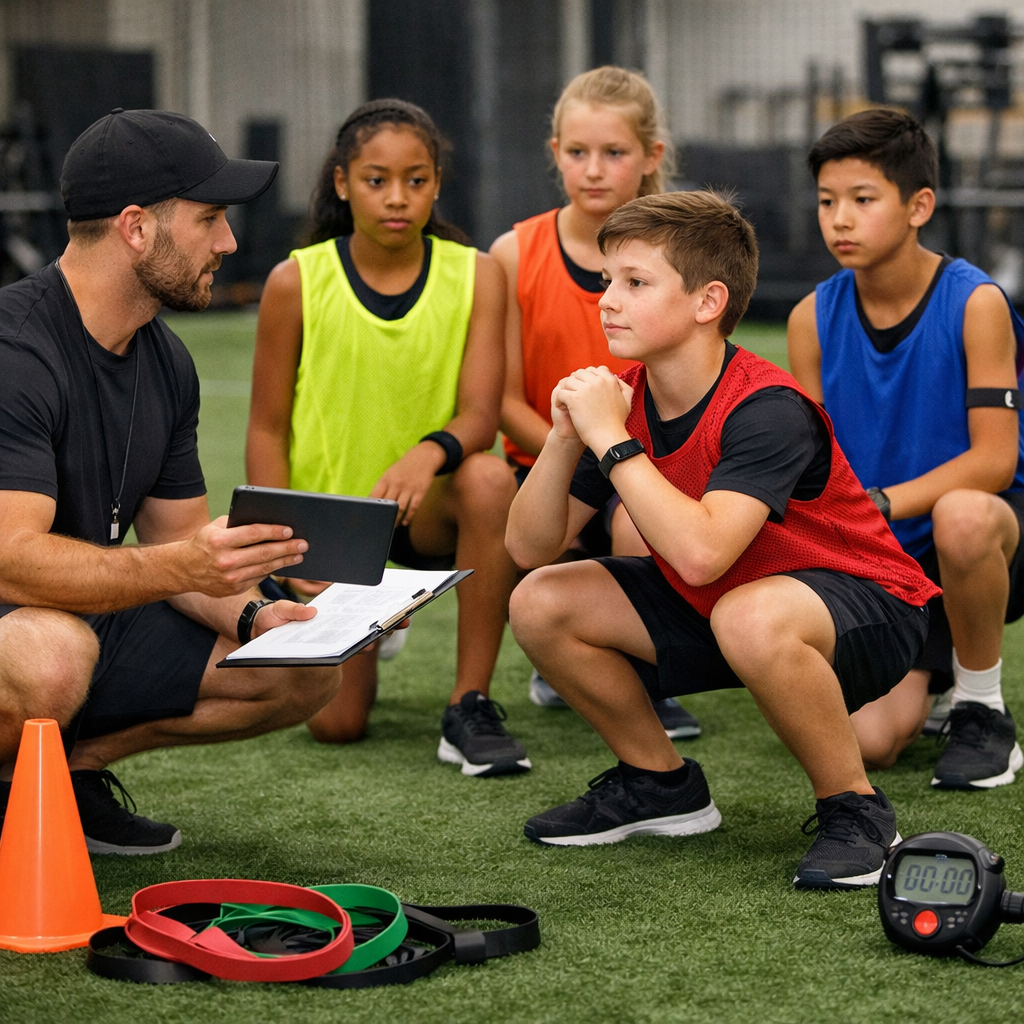
Best Youth Athlete Training Programs of 2026, Backed by Certified Coaches
Strategic Overview
Parents, teen athletes, and school or club coaches come here first for the best youth athlete training programs in 2026. Our picks balance certified coaching with connected tech—hardware plus software, sensors, AI coaching, wearable integration, and performance tracking—so young athletes can train safely at home or alongside team sessions and still see measurable progress. Long-Term Athlete Development (LTAD) is the backbone: a framework that sequences training, recovery, and competition to match growth and maturation. It prioritizes broad skills in early years, progressive strength later, delayed sport-specific training, and scheduled rest to curb overuse and burnout.
Top picks by use case:
- Best for strength development at home: Caliber Strength
- Best for conditioning engagement and cross-training: Peloton App
- Best budget at-home training: Street Parking
- Best for runners and field-sport conditioning: Runkeeper
- Best for baseball/softball mechanics feedback: Diamond Kinetics
- Best for scalable AI technique review between practices: Big League AI
- Best for basketball skills and shot-tracking: HomeCourt
- Best system-level performance culture: Overtime Athletes
How to use this guide:
- Program reviews: see Caliber Strength, Overtime Athletes, Peloton App, Street Parking, Runkeeper, Diamond Kinetics, Big League AI, and HomeCourt below.
- Evaluation criteria: see How we evaluated youth athlete programs.
- Safety and LTAD guardrails: see Safety, age guidelines, and LTAD principles.
- Pricing and budgeting: see Pricing, subscriptions, and hidden costs.
- Tech features and setup flow: see Tech features that matter for youth athletes.
FitnessJudge
At FitnessJudge, we test connected youth personal training the way families actually use it: at home and around busy schedules. We weigh guided classes and coaching quality alongside sensors/AI, tracking accuracy, content ecosystems, subscription costs, and youth safety. Our criteria emphasize certified coaching availability, strength emphasis with clear periodization, load monitoring, recovery guidance, child-safety policies, and measurable progression. This consistent rubric keeps our rankings comparable and decision-ready for families.
We advocate traditional progressive strength as the base for youth performance because research shows that well-designed strength training outperforms sprint-, jump-, and “functional”-only approaches for improving speed, jump, and change-of-direction in youth athletes, a position summarized by Discover Strength’s evidence review (see Discover Strength’s youth strength overview). We then layer sport-specific training, video analysis, and AI feedback to sharpen mechanics without overloading growing bodies.
Caliber Strength
Caliber Strength is a data-driven strength and nutrition platform built for at-home training, with optional private 1:1 coaching. The app logs sets, loads, weekly volume, and readiness while coaching tiers personalize programming; there’s also a free plan library for self-guided users. For youth athletes, Caliber fits off-season foundational strength phases, supports parental oversight of goals and nutrition basics, and reinforces consistent tracking. It aligns closely with our strength-first, periodized criteria.
Tradeoffs and pricing: Caliber’s premium tiers unlock true personalization and accountability; that costs more than metcon-style class subscriptions but generally delivers better long-term strength outcomes. As a benchmark, Garage Gym Reviews rated Caliber 4.6/5 (see GGR’s roundup of online programs).
Progressive overload is a method of gradually increasing training stress—via load, reps, sets, or session density—to stimulate adaptation while minimizing injury risk. Sustainable overload requires planned progression, adequate recovery, and periodic deloads, which aligns well with youth LTAD and seasonality.
Overtime Athletes
Overtime Athletes (OTA) operates like a performance department: periodized blocks that build strength in the off-season, raise intensity and power closer to pre-season, and emphasize execution and recovery in-season. The culture stresses habit coaching—sleep, nutrition basics, warmups, and cooldowns—so athletes remain consistent rather than chasing sporadic intensity. OTA’s approach maps to LTAD best practices and to what elite programs do: progressive overload, structured periodization, and robust recovery to maximize performance without unnecessary wear (see Overtime Athletes on maximizing performance in 2026).
Peloton App
Peloton delivers high-engagement conditioning with immersive live and recorded classes, excellent wearable sync, and a motivating community. For youth athletes, it’s a strong option for aerobic base work, low-impact recovery rides, mobility, and general conditioning—especially when paired with a dedicated strength module. Just note that sport-specific strength and periodization are limited without a separate plan. As context, GGR rated Peloton 4.2/5 for breadth and experience; for athlete performance needs, supplement with structured lifting (see our strength-first criteria above).
Street Parking
Street Parking offers affordable, minimal-equipment at-home training with most workouts under 30 minutes. It’s roughly $19/month with savings for longer commitments and is great for busy schedules and building general work capacity. The tradeoff: limited individualized coaching and less emphasis on heavy strength or technical skill development. Consider pairing with a structured strength block for performance outcomes. GGR’s score: 3.76/5, reflecting strong value for simple conditioning, not individualized strength.
Runkeeper
Asics’ Runkeeper provides free and Go (premium) tiers for structured running plans, GPS tracking, and pacing cues. Youth athletes can use it for base-building blocks, tempo and interval guidance for field sports, and return-to-conditioning protocols—ideally paired with strength training to reduce injury risk. This complements FitnessJudge’s emphasis on strength as the foundation.
Useful metrics to track:
- Weekly mileage and acute:chronic changes
- Pace zones and negative splits
- Time trials (1-mile, 2k) every 4–6 weeks
- Heart-rate trends from wearables to gauge recovery
Diamond Kinetics
Diamond Kinetics brings bat and ball sensors plus AI analytics for baseball/softball mechanics. Scale matters here: the SmartMotion app tracked 632,000 swings in 2024, a sign of robust data capture that supports actionable feedback loops (see Youth Sports Business Report’s 2026 trends). Use swing metrics with coach oversight to manage weekly volume, cue efficient sequencing, and cap swings to align with age and rest guidelines. We treat Diamond Kinetics as an adjunct tool alongside a structured strength and skills plan.
Video analysis uses computer vision to measure movement—joint angles, velocities, and timing—from recorded clips. For youth, it highlights inefficiencies and tracks changes over time, but should complement, not replace, qualified coaching and sensible workloads.
Big League AI
Big League AI applies biomechanics models reportedly trained on 70,000+ players and 400,000 distinct swing motions, enabling pattern recognition that can inform drills and compare progress across sessions (as reported by Youth Sports Business Report). It’s useful for at-home reps and feedback between coach visits; always include human review to account for growth spurts, workload, and psychosocial health. AI coaching can individualize development at scale, but LTAD-aligned rest and volume rules still govern safety. Like other AI analysis tools, we recommend using it as a supplement to well-planned training.
HomeCourt
HomeCourt is a basketball skills app that uses your phone’s camera for shot-tracking and mechanics cues. It’s excellent for high-rep, gamified drills between practices and offers instant feedback to reinforce consistency. Balance high-volume shooting with planned rest and strength to avoid overuse; track weekly drill counts and vary movements. Pair HomeCourt blocks with a strength phase and mobility work, and log key metrics like accuracy and release time for periodic review. We classify it as a targeted skills adjunct within a broader program.
How we evaluated youth athlete programs
We scored each option on coaching credentials, strength and periodization quality, recovery education, performance tracking/sensors, LTAD alignment, cost/value, and sport specificity. Third-party data (e.g., GGR scores) inform context, not rankings. Our research pillars: well-designed strength training improves youth speed, jump, and agility more than alternative methods (see Discover Strength’s youth strength overview), and elite programs reward progressive overload, periodization, recovery, and consistent adherence (see Overtime Athletes on maximizing performance in 2026). This is the same standard we apply across all FitnessJudge youth picks.
Periodization defined (45 words): Periodization divides training into macro-, meso-, and microcycles that vary intensity, volume, and focus to maximize adaptation while reducing injury risk. A common youth cadence: off-season strength building, pre-season intensity and power ramp, and in-season maintenance with deliberate recovery and load control.
| Program | Coaching credentials | Strength & periodization | Recovery education | Tracking & sensors | LTAD safety alignment | Cost/value | Sport specificity | Third-party data |
|---|---|---|---|---|---|---|---|---|
| Caliber Strength | 5/5 | 5/5 | 4/5 | 4/5 (app tracking) | 4/5 | 3/5 | 3/5 | GGR 4.6 |
| Overtime Athletes | 4/5 | 4/5 | 4/5 | 3/5 | 4/5 | 4/5 | 4/5 | — |
| Peloton App | 3/5 | 3/5 | 3/5 | 4/5 (wearables) | 3/5 | 4/5 | 2/5 | GGR 4.2 |
| Street Parking | 3/5 | 2/5 | 2/5 | 2/5 | 3/5 | 4/5 | 2/5 | GGR 3.76 |
| Runkeeper | 3/5 | 1/5 (strength) | 3/5 | 4/5 (GPS/HR) | 3/5 | 4/5 | 5/5 (running) | — |
| Diamond Kinetics | 2/5 (adjunct) | 1/5 | 2/5 | 5/5 (sensors/AI) | 3/5 | 3/5 | 5/5 (baseball) | — |
| Big League AI | 2/5 (adjunct) | 1/5 | 2/5 | 4/5 (video AI) | 3/5 | 3/5 | 4/5 (bat sports) | — |
| HomeCourt | 3/5 (adjunct) | 1/5 | 2/5 | 4/5 (CV tracking) | 3/5 | 4/5 | 5/5 (basketball) | — |
What makes a great youth athlete program
Non-negotiables:
- Certified coaching or vetted plans with clear progression and measurable benchmarks.
- Progressive strength as the foundation; build power and speed on top of strength.
- Consistent, periodized structure with built-in recovery and objective load monitoring.
Green flags:
- Age-appropriate volumes and rest, two weekly rest days, and delayed specialization.
- Performance tracking for strength PRs, jump tests, and sprint times; regular movement-quality checks; parent-facing reports.
Load monitoring tracks the total stress from training and competition (volume, intensity, frequency). For youth, it helps identify spikes that raise overuse-injury risk and guides adjustments to maintain steady, safe progress.
Safety, age guidelines, and LTAD principles
Guardrails that keep development healthy:
- Keep organized sport hours per week at or below the athlete’s age (an 11-year-old ≈ 11 hours).
- Schedule at least two full rest days weekly and delay specialization as long as possible.
- Exceeding 16 hours/week is associated with higher injury risk.
- Psychosocial health matters: intense training can trigger burnout, depression, and anxiety; roughly 70% of kids leave organized sports by age 13—programs must protect enjoyment and balance (see Hopkins Medicine’s guidance on youth sport specialization).
Policy trends shaping 2026 programs include wider ECG screening pilots (e.g., Florida’s Second Chance initiatives), stricter heat policies using wet-bulb globe monitoring in hot states like California, and comprehensive safety training standards (e.g., Tennessee’s Safe Stars), as tracked by Youth Sports Business Report. Our recommendations follow these guardrails where applicable.
Pricing, subscriptions, and hidden costs
Examples and comparisons:
- Budget conditioning: Street Parking about $19/month; short sessions with minimal gear; discounts for longer terms.
- Hybrid strength coaching: Caliber has a free plan library; paid tiers add 1:1 coaching and personalization.
- Ecosystem access: Peloton subscription buys live classes, programming depth, and wearable sync; family plans can improve value.
Example 12‑month budgeting table (typical ranges; check current pricing):
| Program | Base subscription (12 mo) | Coaching upgrade (12 mo) | Expected equipment | Optional sensors/apps | Projected 12‑mo total |
|---|---|---|---|---|---|
| Caliber Strength | $0–$180 (free–$15/mo) | $600–$2,400 ($50–$200/mo) | DBs/bands; optional barbell | — | $600–$2,700+ |
| Overtime Athletes | $120–$360 ($10–$30/mo) | — | DBs/bands; cones/sled optional | — | $200–$500+ |
| Peloton App | $132–$240 ($11–$20/mo) | — | Bike/rower optional | HR strap/watch | $200–$1,000+ |
| Street Parking | ~$228 ($19/mo) | — | DBs/jump rope; minimal gear | — | ~$300–$500 |
| Runkeeper Go | ~$120 ($10/mo) | — | Running shoes only | HR strap/watch | $200–$500 |
| Diamond Kinetics | $100–$200 | — | Bat/ball | Bat or ball sensor ($100–$200) | $200–$400 |
| Big League AI | $100–$300 | — | Smartphone tripod | — | $120–$350 |
| HomeCourt | $70–$120 | — | Basketball and hoop | — | $150–$300 |
Hidden costs to plan for: seasonal sport camps, travel fees, replacing worn shoes or wearables, data subscriptions, and private assessments. Prioritize essentials that show measurable progression—strength milestones, sprint/jump improvements, and clean mechanics on video; that’s how FitnessJudge weighs value.
Tech features that matter for youth athletes
Priorities that actually improve outcomes:
- Accurate performance tracking for sets, loads, sprint times, and jump height with simple dashboards parents can review.
- Video analysis and AI feedback for technique, used alongside a human coach; AI can individualize at scale, but oversight is essential.
- Wearable integration for heart-rate and workload management to avoid volume spikes.
Signals of maturity:
- Diamond Kinetics tracked 632,000 swings in 2024, indicating robust data loops.
- Big League AI models trained on 70,000+ players and 400,000 motions, supporting reliable comparisons.
A safe tech adoption flow:
- Establish baselines (strength tests, sprint/jump metrics, resting HR and HRR).
- Set age-appropriate weekly volumes using LTAD rules and schedule two rest days.
- Add one tech feature at a time; verify data aligns with session RPE and recovery.
- Review monthly with a coach; adjust load, goals, and drills accordingly.
Frequently asked questions
What certifications should youth performance coaches have?
Look for NSCA-CSCS, USAW, or CSCCa credentials plus youth experience, background checks, and policies aligned with LTAD and youth safety. FitnessJudge reviews prioritize programs that meet these standards.
How many days per week should youth athletes train?
Aim for 3–5 training days with two full rest days weekly; keep organized sport hours per week at or below the athlete’s age and schedule seasonal breaks. FitnessJudge’s recommendations follow LTAD-aligned volumes.
Are AI coaching and video analysis safe and effective for youth?
Yes—when workloads are age-appropriate and a certified coach oversees progression; AI is great for mechanics, but humans manage growth, load, and motivation. FitnessJudge treats AI as an adjunct to coached, periodized training.
How do I know a program is progressing my athlete appropriately?
You should see planned, gradual increases in load or volume, stable soreness, and periodic test improvements; sudden volume spikes or lingering pain are red flags. FitnessJudge’s guides favor programs with clear benchmarks and regular check-ins.
What equipment do we need for at‑home youth training?
Start with adjustable dumbbells, resistance bands, a sturdy step or box, and a mat; add a barbell or wearable later, and use a phone camera for basic video analysis. The programs we highlight work with this setup and scale as athletes grow.