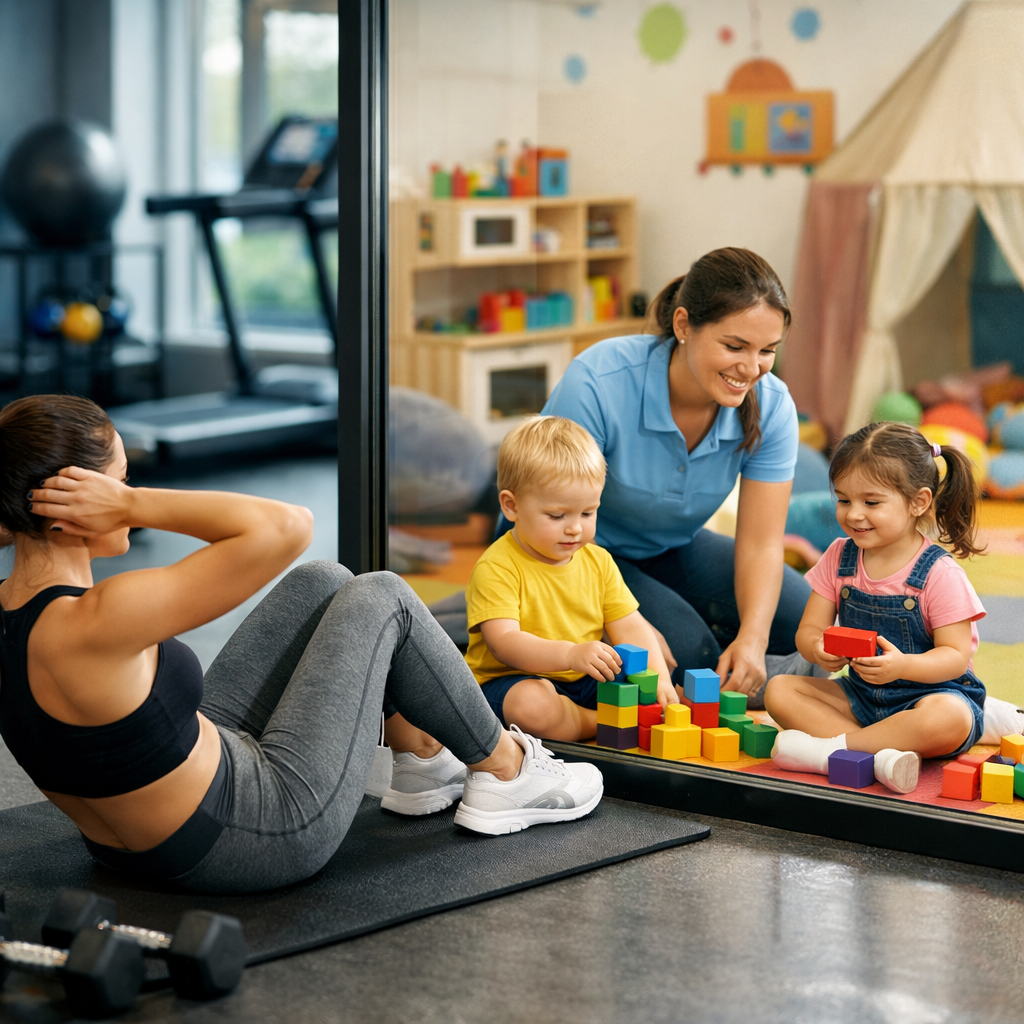
Family-Friendly Gyms With Childcare and Child Watch Near You
If you’re searching for gyms near me with childcare, here’s the short answer: many YMCAs include child watch with membership, while select national chains and community clubs offer on-site childcare or kids clubs as an add-on or included perk. Typical age ranges run from about 3 months to 12 years with 2–2.5 hour visit limits. Pricing varies: some locations include care, others charge drop-in fees or modest monthly add-ons. Below, we break down what child watch vs. on-site childcare means, what it costs, how to vet safety and engagement, and where to start your search—plus FitnessJudge’s take on when a smart home setup can beat a commute-dependent routine.
What counts as childcare vs child watch
Child watch A supervised, short-term, play-focused room that lets parents work out while kids engage with toys, crafts, and soft play. It is not full-day care. Typical caps are 1.5–2 hours, and programs post age minimums, ratios, and rules for illness and pickup in writing, as outlined in this parent’s guide to gym childcare (fitnesscfgyms.com).
On-site childcare Drop-in care located at the gym that may add structured activities to supervised play. Common age ranges span roughly 3 months–12 years, with session limits often 2–2.5 hours. Some gyms bundle access into family memberships, while others offer low-cost drop-in or monthly add-ons (fitnesscfgyms.com).
Family programming Coach-led, age-appropriate classes where kids actively participate (e.g., movement circuits) while parents train in parallel. Unlike passive playrooms, this is an activity track with instruction, sometimes scheduled alongside adult classes to simplify family logistics, as highlighted in a family-friendly gyms round-up in Phoenix (Tusk Athletics AZ).
Examples and quick contrasts:
- Basic child watch: supervised play up to about 2 hours; toys, crafts, and story time; minimal instruction; age minimums and caps posted.
- Kids clubs with structured classes: scheduled, coach-led sessions for multi-age groups; clear curricula; often specific time slots and booking requirements.
What’s usually included vs. excluded
- Often included: secure check-in/out, posted ratios, age-appropriate toys, crafts, and soft play; clear time caps; illness policy.
- May be included at some sites: brief, staff-led activities or story time; screen-free or limited-screen policies.
- Common exclusions: diaper changes at some gyms; medications; tutoring/academics; drop-offs beyond time caps; full-day or school-like care.
Why on-site kids care helps parents stay consistent
When childcare is on-site, scheduling friction drops: parents can lift, ride, or take a class the moment they arrive instead of coordinating sitters or nap windows—one reason these services boost adherence to weekly strength and cardio targets (fitnesscfgyms.com). Cost-wise, gym childcare is usually far cheaper than a sitter; many programs run about $6–$15 per drop-in visit or $10–$30 per child monthly when not included (fitnesscfgyms.com). Broader context matters too: with tighter household budgets and uncertainty around public childcare funding, flexible, short-term options at community organizations and clubs may see growing demand, according to 2025 family trend analysis (Child Trends).
Common services and age ranges
Typical ages and time caps vary by chain and location. Many programs accept infants around 3 months and serve kids up to 12 years, with 2–2.5 hour caps. For example, the Las Vegas YMCA Kids Gym accepts ages 3 months–7 years, up to 2 hours per visit, included with membership (Las Vegas YMCA Kids Gym).
Service type vs. typical ages and limits
| Service type | Typical ages | Typical time cap | Notable policies/examples |
|---|---|---|---|
| Child watch | ~6 months–10 years (varies) | 1.5–2 hours | Play-focused, limited instruction; clear illness and pickup rules |
| On-site childcare | ~3 months–12 years | 2–2.5 hours | May include simple activities; often reservation or first-come systems |
| Family programming | 3–12 years (by class) | Class length (30–60 min) | Coach-led; scheduled alongside adult sessions; booking required |
| YMCA example | 3 months–7 years | Up to 2 hours | Included with membership at select branches (e.g., Las Vegas) |
Common services you’ll see
- Supervised play, crafts, story time, soft play areas
- Posted screen policies; some big-box rooms may allow limited screen time, while others emphasize toys and staff-led engagement
- At select clubs, structured classes (age-banded movement, games, or circuits) vs. passive rooms
Offerings vary widely by location—even within the same chain—so verify locally before you join.
Safety standards to verify before you join
Non-negotiables most reputable programs follow include CPR/AED-trained staff, background checks, and secure check-in/out with ID matching and controlled access doors (fitnesscfgyms.com). Visit in person and observe a session. Parent reports note variability in staff engagement and activity rotation, so firsthand observation and local reviews are critical (parent feedback thread on r/SAHM). Ask for written policies covering illness exclusion, incident reporting, and emergency procedures. If staff can’t produce them, reconsider. At FitnessJudge, we treat these as baseline requirements for family-focused facilities.
Typical costs, time limits, and booking rules
Expect one of three pricing models:
Cost models at a glance
| Model | Typical pricing | What it includes | Where you’ll see it |
|---|---|---|---|
| Included with membership | $0 added | Child watch access within posted limits | Community orgs like select YMCAs |
| Monthly add-on | ~$10–$30 per child | Unlimited or capped visits per month | Family-friendly chains/clubs |
| Drop-in | ~$6–$15 per visit | Single visit within time cap | Boutiques and big-box gyms |
Time limits and why they exist
- Most programs cap visits at 2–2.5 hours to maintain safe ratios, keep flow manageable, and ensure kids remain engaged (fitnesscfgyms.com).
Booking norms to expect
- First-come sign-ins during non-peak times; reservations during rush hours.
- Some locations enforce no-show or late-cancel fees during high demand—confirm these before you commit.
How to choose the right facility for your family
A simple five-step flow:
- Shortlist nearby gyms and community centers within your real drive-time radius.
- Compare service models: child watch vs. on-site childcare vs. kids club classes.
- Test at peak times to see real ratios, waitlists, and noise levels.
- Match policies to your kids’ ages (infant diapering, toddler separation, preteen options).
- Tally total monthly costs (membership + childcare add-ons + class fees).
Also weigh fit for your training style (strength floor, cardio machines, classes) and family amenities (pool, family locker rooms, family-friendly class times). When feasible, prioritize program quality and consistency over pure proximity. FitnessJudge uses this same five-step flow in our comparisons to keep decisions objective and quick.
National and local options to explore
Examples you’ll find in many markets
- YMCA locations: many include child watch with membership; Las Vegas, for instance, serves ages 3 months–7 years for up to 2 hours (Las Vegas YMCA Kids Gym).
- Select chains and clubs with childcare or kids programming: Life Time, Five Seasons Sports Club, and Crunch Fitness are listed among options offering kids clubs or supervised play at certain sites (national roundup by Danielle Moss).
- Chuze Fitness and other regional chains often run family-friendly offerings in specific markets; availability varies by club.
Local variety snapshot
- Green Hills Family YMCA (Nashville) and South Valley Family YMCA (San Jose) often host family programming and child watch, with details set by branch.
- In Rochester, Burn Boot Camp advertises complimentary child watch (as early as 8 weeks up to 13 years at select studios), and Midtown Athletic Club offers daily child watch up to 2 hours (Rochester gyms with child care guide).
Where to search
- Use the FindChildcareGyms.com directory to scan options by city and chain (including Gold’s Gym and other regional players). Then apply the FitnessJudge checklist below to verify details and policies before you join.
When a home gym beats a gym with childcare
Consider home solutions if your gym’s hours clash with nap windows, if engagement quality feels inconsistent, or if you’re facing reservation bottlenecks—issues parents commonly report across locations. Smart home gyms add interactive coaching, real-time feedback, and progress tracking with zero commute. Over 12–24 months, hardware plus an app subscription can be cost-competitive once you factor in childcare add-ons and travel time. FitnessJudge’s take: pick the path that protects consistency with the fewest logistics.
FitnessJudge picks for at-home, parent-friendly solutions
Here’s what to prioritize based on parent-tested criteria:
- Smart strength systems: Form tracking and adaptive resistance enable efficient 20–30 minute blocks during naps. Check space needs (often a wall mount or compact footprint), build quality, library depth for progressive plans, and warranty/support responsiveness.
- Connected bikes or rowers: Low-noise operation suits light sleepers; look for adjustable geometry, reliable metrics, and live + on-demand class variety.
- App-first training: If space is tight, pair a robust strength/cardio app with minimal equipment. Prioritize programs with phased progressions, recovery guidance, and clear metrics.
Pro tip: Pair sessions with a baby monitor or a safe playpen zone for supervised, at-home workouts.
How to vet quality and engagement during a trial visit
- Observe a full session: Are staff proactive, using kids’ names, and rotating activities every 10–15 minutes?
- Confirm ratios, CPR/first aid credentials, background checks, age limits, and typical visit length.
- Inspect sign-in/out: ID verification, controlled access, matching wristbands or tags.
- Ask about the weekly activity plan and screen policy.
- Add social proof: read recent local reviews and ask other parents about staff consistency and turnover.
Policies that matter for infants, toddlers, and preteens
Age-specific policy differences
| Age group | Key policies to confirm | Practical impact |
|---|---|---|
| Infants (≈8 weeks–12 months) | Minimum start age (often 3 months; some studios start at 8 weeks), diapering/feeding rules, soothing protocols, safe sleep policies, illness exclusions | Determines earliest feasible start, what caregivers will and won’t do, and whether you need to return for diaper changes |
| Toddlers (1–3 years) | Ratios, potty-training rules, separation-anxiety handling, active play zones vs. screens, snack policies | Influences drop-off success, engagement level, and hygiene routines |
| Preschool–Preteen (4–12 years) | Max age (often 12), structured activities vs. free play, homework/screen policies, options for youth fitness or family cardio | Affects boredom risk, skill-building, and whether older kids can join supervised fitness areas |
Local notes: Some studios (e.g., Burn Boot Camp in certain cities) begin as early as 8 weeks and run through age 13; others cap at age 7, especially at branch-based child watch rooms (Rochester gyms with child care guide).
What to expect from programming and activities
Baseline offerings include toys, crafts, open play, and story time, with posted screen policies that can range from screen-free to limited use. Some big-box rooms lean more passive during off-peak hours, while clubs with kids programming run coach-led circuits and games at set times—ask for a weekly activity schedule to prevent boredom and align with your workout plan.
Red flags and when to walk away
- Unattended children, phones out among staff, or chaotic sign-in/out procedures
- Locked doors without visibility into rooms or no way to observe transitions
- Staff unable to document CPR/first-aid training, ratios, or incident policies
- Repeatedly low engagement or screens replacing activities during peak times
If you see systemic supervision gaps or poor engagement, choose another facility.
Final checklist for comparing memberships and care
Side-by-side comparison template
| Criteria | Gym A | Gym B | Notes |
|---|---|---|---|
| Membership cost | |||
| Childcare model (included/add-on/drop-in) | |||
| Per-visit fee | |||
| Monthly add-on | |||
| Age range served | |||
| Time cap per visit | |||
| Booking method (walk-in/reserve) | |||
| Peak-hour availability | |||
| Activity mix (structured vs. play) | |||
| Review sentiment (recent) |
Safety and policy yes/no boxes
- CPR/AED-trained staff verified
- Background checks confirmed
- Secure ID check-in/out observed
- Posted ratios and age limits
- Written illness and incident policies
- Emergency procedures reviewed
- Screen policy and weekly activity plan provided
Frequently asked questions
Which gym memberships usually include childcare or child watch
Many community organizations include child watch with membership, and some large chains or clubs offer included or low-cost options; always verify at your specific location. FitnessJudge’s guides and checklists can help you compare what’s included.
How much does gym childcare cost and what’s typically included
Expect about $6–$15 per drop-in visit or $10–$30 monthly add-ons per child where not included. Most rooms provide supervised play, toys, and crafts for 1.5–2 hours; FitnessJudge summarizes inclusions in the checklist above.
What ages are accepted and how long can kids stay
Most programs serve infants around 3 months up to 12 years, with 2–2.5 hour caps. Some sites set narrower bands (e.g., up to age 7), so confirm before you join; FitnessJudge’s checklist helps you track these.
How do I confirm safety, staff ratios, and check-in procedures
Ask for written policies and proof of CPR/first-aid training, observe a session, and test the sign-in/out process. Good programs verify IDs, control access, and post ratios and age limits clearly, and the FitnessJudge checklist helps you confirm these quickly.
Is a smart home gym with coaching a better value than paying for childcare
If childcare fees add $30–$50 monthly or limit your schedule, a smart home gym can be cost-competitive over 12–24 months and boosts consistency by removing commute and booking friction. FitnessJudge’s at-home picks focus on options that minimize noise and setup time.