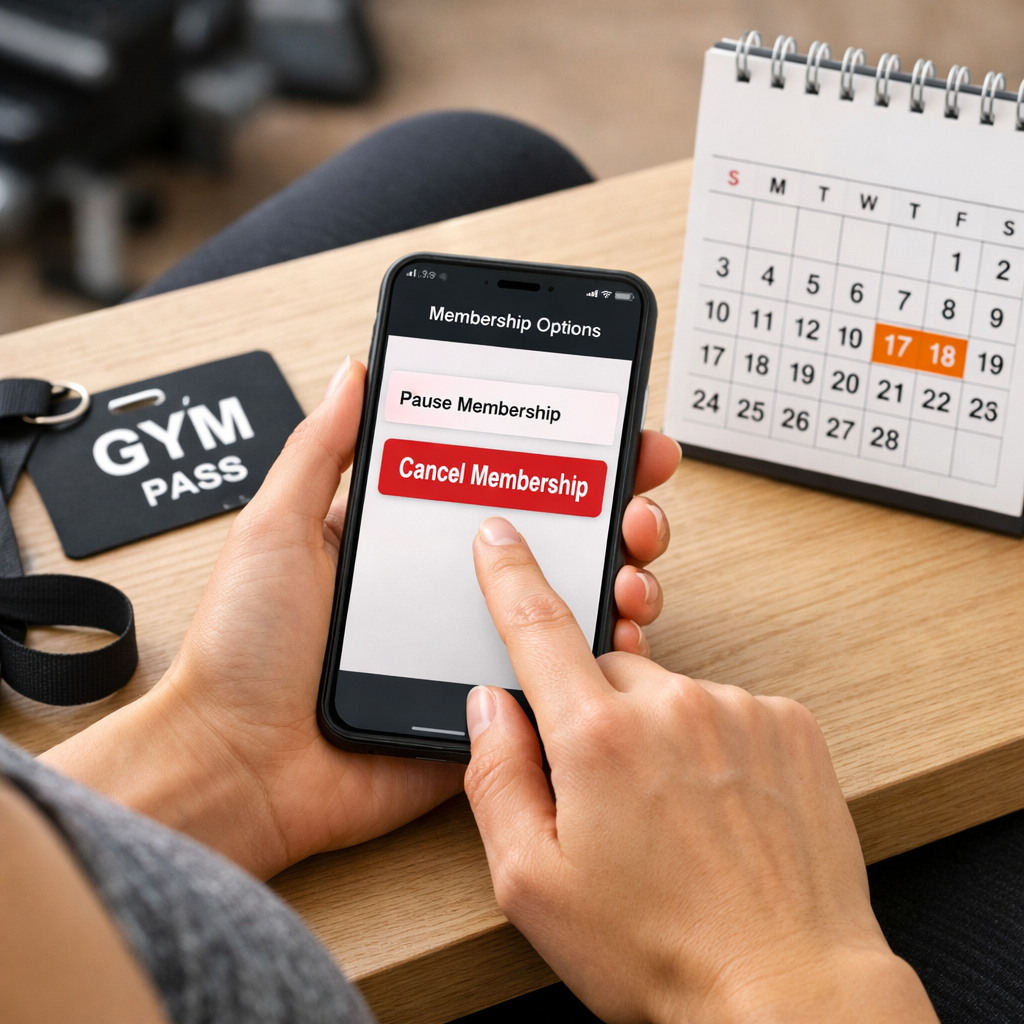
Flexible Gym Memberships: Cancel Anytime, No Long-Term Commitment Required
Looking for a gym you can leave without hassle? Cancel-anytime (no-commitment) memberships let you pay monthly, use the club, and stop billing with a simple notice—no long-term contract required. Many national chains and community gyms now offer month-to-month tiers, but fees and policies still vary by location. Use this guide to compare options side by side, verify real costs (initiation, annual, freeze), and confirm amenities before you join. We’ll highlight which brands advertise no-commitment plans, how community and boutique options stack up, and the exact steps to lock in a clean, cancel-anytime deal with no surprises. FitnessJudge’s side-by-side template helps you document fees and cancellation terms up front.
What cancel anytime means
“Cancel anytime” means your access is billed monthly with no fixed end date, and you can end billing without penalties by following the club’s written notice policy. No-commitment plans typically include month-to-month, pay-as-you-go, or even weekly access options, and they’re growing because members prize flexibility and hybrid workouts after COVID-19 disruptions, according to analyses of no-commitment gym memberships and consumer preferences (see no-commitment gym memberships from finegym.io).
The promise is simple: you’re not locked into a term contract and can cancel anytime—just verify locally whether a written notice window (often 14–30 days) applies, and how to submit it (email, portal, in person). FitnessJudge checklists make it easy to capture the exact notice window and submission method before you sign.
Month-to-month vs annual terms
Month-to-month membership (definition): A rolling agreement billed each month that you can end with notice, minimizing long-term obligation. Annual term contracts lock in a full year—often at a lower monthly rate—but carry early termination penalties if you cancel before the term ends.
Industry context: Clubs design pricing to improve retention. Post-pandemic industry retention averages around 71–76% depending on segment, with boutiques near the top—a signal that pricing and term length reflect churn realities (see post‑pandemic industry retention data from MMCG Invest).
Quick comparison:
| Feature | Month-to-month (No-commitment) | Annual contract (Term-based) |
|---|---|---|
| Commitment length | None; renews monthly | 12 months (common) |
| Initiation/joining fee | $0–$59 typical; often promo-waived | $0–$99 typical; may be bundled with discounts |
| Monthly dues | Usually higher than annual rate | Usually lower than month-to-month |
| Annual maintenance fee | Sometimes $0–$59; verify timing | Common $29–$69; billed seasonally |
| Cancel terms | 14–30 days’ written notice; no early termination fee | Early termination fee or balance of term applies |
| Freeze options | Often available; $0–$15/mo typical | Often available; same or slightly stricter rules |
| Best for | New members testing fit, movers/travelers, hybrid users | Long-term, price-sensitive, consistent gym-goers |
Note: Fee ranges vary widely by brand and market—always confirm at the location level.
Total cost breakdown for no-commitment plans
Use this checklist to calculate your real “total cost of ownership,” especially in the first 90 days:
- Initiation or joining fee
- First month’s dues (and any pro-rated partial month)
- Annual maintenance fee (amount and billing month)
- Keycard or tag fee
- Add-ons: classes, small-group training, recovery zones, aquatics, sports courts
- Childcare, towel/locker service, parking
- Freeze fees and rules
- Cancellation/notice requirements (window, method)
- Taxes and assessment fees
Real-world anchors:
- Entry-level flexible packages can start around $19/month; digital-only memberships often start under $10/month.
- Some insurance or network programs offer nationwide access to 10,000–13,000+ gyms under one umbrella (see Tivity Health network access via Blue365).
Simple calculator prompts:
- Your first-month cost = initiation + first month + pro-rated days + keycard + taxes.
- Your 3-month cost = first-month cost + months 2–3 + any annual fee due.
- Your 12-month cost = monthly dues × 12 + initiation + annual fee(s) + add-ons + taxes.
National chains with month-to-month options
Many national gym chains advertise cancel-anytime or no-commitment tiers, but specifics vary by club. Confirm the details, in writing, at your home location.
- Planet Fitness: The “No Commitment” plan allows cancellation at any time without a fee; verify whether your home club requires a 30-day notice and if an annual fee applies (see Planet Fitness memberships).
- Also check: Crunch, Blink, YouFit, YMCA, and some Anytime Fitness and Snap Fitness locations for month-to-month tiers. Policies differ by franchise/branch.
- What to capture at sign-up (use a FitnessJudge-style checklist): monthly dues by tier, multi-location access, class/recovery add-ons, equipment/reservation rules, and the exact cancellation steps (who, where, how).
Community and local options
Local choices—YMCAs, community centers, university rec facilities, municipal fitness, and independent studios—often match or beat chains on flexibility. Many offer:
- Month-to-month access and sliding-scale pricing or financial aid
- Family add-ons, aquatics, youth programs, and court sports
- Stronger community ties and class-first cultures that can improve consistency and stickiness relative to big-box clubs
Hybrid readiness is now common: many community providers pair in-person access with livestreams or on-demand libraries. Ask about digital content quality, app support, and reservation systems. FitnessJudge comparison fields work well here to capture family options, aquatics, and digital access side by side.
Checklist for local scouting:
- Month-to-month rate and initiation/annual fees
- Drop-in class pricing and class reservation policies
- Notice window, freeze rules, and cancellation method
- Childcare, aquatics, court access, and parking policies
How to verify contract terms at your specific location
Location-level policies drive your real experience. Lock down details before you sign:
- Request a written rate sheet listing initiation, monthly dues, annual fee timing, and add-ons.
- Ask for the cancellation clause in writing, including notice window and acceptable submission methods (email, portal, certified mail, in person).
- Confirm your home club designation, transfer rules, and whether cancellations/freezes must be initiated at the home club.
- Photograph posted policies and save copies of any promo sheets.
Definition: Your home club is the primary location tied to your agreement; most policy actions (cancellation, freezes, billing disputes) flow through that club unless your tier includes true multi-location or network access. FitnessJudge’s contract snapshot helps you store these items and reference them later.
Amenities to confirm before you join
Match the club’s offering to your training plan—and confirm what costs extra.
- Strength floor: squat racks/platforms, free-weight limits, bumper plates
- Cardio: machine counts, queue times at peak hours
- Classes: schedule density, reservation rules, penalty policies
- Aquatics and heat/cold: pool, sauna, steam, cold plunge
- Sports: basketball, pickleball, turf space, track
- Services: childcare, towels, lockers, showers, parking, Wi‑Fi
- Peak-hour capacity: observe crowding at the times you’ll train
Trend-led differentiators: recovery tech (e.g., red light therapy, PEMF), breathwork/mind-body spaces, and curated recovery lounges are expanding—often as premium add-ons (see recovery and wellness build-outs in gym design trends from Biofit and broader wellness expansion trends from Les Mills).
Definition: Recovery amenities are tools and services that support post-exercise restoration—such as sauna, cold plunge, massage chairs, or tech-based modalities—and may require premium tiers.
Flex features to look for
Hybrid access is now a default expectation. Remote and hybrid workers embraced at-home training during and after the pandemic; clubs that pair in-person access with quality digital apps see stronger engagement (see 2024 health club trends from Club Automation). Gen Z is accelerating the shift: hybrid members complete 67% more workouts and are 40% more likely to stay 3+ years; over half of Gen Z prefer comprehensive mobile apps (see Gen Z fitness trends from Intenza Fitness).
Must-have flex features:
- App-based class booking and capacity tracking
- On-demand and livestream content
- Reasonable freeze options for travel/injury
- Multi-location or network access
- Guest passes for family/friends
- Simple, digital cancellation flow with confirmation receipts
Trial and access strategies
Pressure-test a gym before you pay full freight.
- Low-risk trials: day passes, weekend trials, class packs, or digital-only trials
- What to measure: class waitlists, rack/platform availability, locker/shower cleanliness, parking reliability, and Wi‑Fi stability (for streaming/coaching apps)
- Hybrid trial: test an in-person workout and the app experience in the same week—hybrid participation surged after 2020, and trial-to-paid conversions in fitness can reach about 64% when the experience fits (see digital fitness trends from Member Solutions) Log your findings in a FitnessJudge comparison sheet so your decision reflects real usage, not just price.
How to compare gyms side by side with FitnessJudge
Standardize your comparison so hidden fees don’t slip through. With FitnessJudge-style fields, line up:
- Initiation fee, monthly dues, annual fee (and billing month)
- Cancellation notice (days, method), freeze policy (rules, fee)
- Multi-location rules and network access
- Class access (included vs. add-on), recovery amenities, childcare
- Parking fees or validations, guest pass rules
- First 90 days total cost and proof of cancel-anytime terms (PDF/email screenshot)
Simple comparison template:
| Criteria | Club 1 | Club 2 |
|---|---|---|
| Initiation + keycard | ||
| Monthly dues (tier) | ||
| Annual fee (bill month) | ||
| First 90 days total | ||
| Cancel notice + method | ||
| Freeze terms/fees | ||
| Class/recovery add-ons | ||
| Multi-location/network | ||
| Childcare/parking | ||
| Cancel-anytime proof | Attach PDF/email | Attach PDF/email |
For more side-by-side tools and checklists, visit FitnessJudge.
Red flags and fee traps to avoid
Watch for:
- Vague cancellation wording or “manager approval required”
- Hidden annual fees on a month-to-month plan
- Certified-mail-only cancellations or in-person-only windows
- High access-card fees or “teaser” rates that auto-convert to long-term terms
- Restrictive home-club rules that block easy cancellation or transfer
Industry note: Regulators are pressuring for clearer, simpler cancellations as churn and cancellations climbed year over year—clubs have been under the microscope as 2025 cancellation rates rose (see industry scrutiny reported by Athletech News).
Pre-sign checklist:
- Get the full fee sheet and cancellation clause in writing
- Confirm the notice window and acceptable submission methods (email/portal preferred)
- Verify whether add-ons are opt-in (not auto-enrolled) and how to remove them
Who should choose no-commitment plans
Ideal for:
- Beginners building consistency with low risk
- Remote/hybrid workers and frequent travelers
- Students, interns, and short-term residents
- Class-first users sampling formats and schedules
- Anyone who values strong digital content and easy cancellation
Consider annual terms if:
- You’re price-sensitive, plan to attend 12+ months, and can leverage lower rates
- You want bundled value (family add-ons, multi-location access) that offsets commitment
Pro tip: Seek plans with in-app programs, challenges, and habit tracking—gamification and goal-setting consistently correlate with higher retention.
Frequently asked questions
How do I cancel a month-to-month gym membership?
Submit a written request to your home club (email, online form, or in person) with your member details and desired end date, and keep the confirmation. FitnessJudge’s cancellation checklist helps you track the steps and proof.
What notice period is typical for cancel anytime plans?
Most require 14–30 days’ notice; get the policy and submission method in writing. Store it with your FitnessJudge comparison.
Are there fees when canceling a no-commitment membership?
There’s no early termination fee, but billing may continue through the notice window or current cycle—verify in writing. FitnessJudge templates prompt you to confirm any annual maintenance fee timing.
Can I freeze my membership instead of canceling?
Often yes; ask about allowed reasons, minimum/maximum freeze length, and any monthly freeze fee. FitnessJudge’s policy fields make these terms easy to compare.
What documents should I keep when submitting a cancellation?
Keep your signed agreement, fee sheet, and the cancellation email or portal confirmation. Save screenshots of any “cancel anytime” language—FitnessJudge reminds you to attach them.