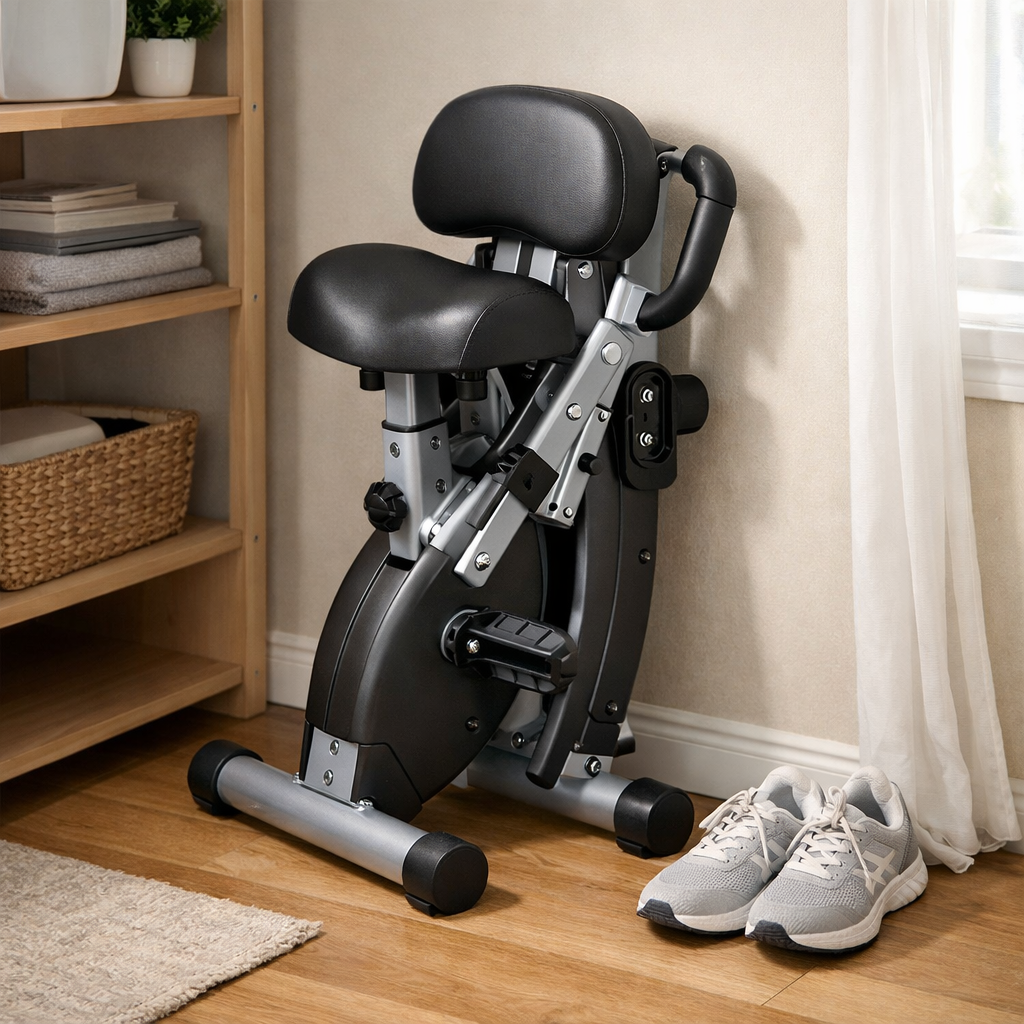
Where to Buy Collapsible Exercise Bikes That Fold for Easy Storage
If you want a cardio machine that tucks into a closet or corner, a collapsible exercise bike is the most practical pick. The best places to buy are major online marketplaces for fast shipping and deep selection, brand-direct sites for clear specs and support, and big‑box/sporting retailers if you want to test stability and folding mechanisms in person. Before you shop, measure your storage space, confirm a compact footprint and transport wheels, and prioritize magnetic resistance for quiet use in apartments. Typical X‑frame folding bikes list around a 220 lb rider weight limit and shine for 30–60 minute, low‑impact sessions, which helps set realistic expectations according to T3’s folding‑bike guide. FitnessJudge prioritizes clear specs, quiet magnetic drives, and documented folded dimensions that match small spaces.
Quick decision framework for folding exercise bikes
Use this FitnessJudge 5-step filter to land a confident short‑list in under three minutes:
- Clarify goals: light daily cardio, return from injury, or small‑space movement.
- Measure space: riding footprint and folded size; map storage path/doorways.
- Confirm rider fit: height range, rider weight limit (target ≥220 lb on X‑frames).
- Choose ride feel: magnetic resistance for quiet, low‑maintenance use.
- Pick buying channel: marketplace for breadth/speed, brand‑direct for support.
“Folding exercise bike” — A stationary bike with a frame that collapses to reduce storage footprint; many include transport wheels and basic LCDs showing speed, time, distance, and calories. Designs prioritize portability over high resistance or heavy flywheels, suiting short, low‑impact workouts.
At‑a‑glance matrix (match goals to features and buying channel)
| Goal | Recommended features | Session length | Best buying channel |
|---|---|---|---|
| Beginner light cardio | Magnetic resistance, compact footprint, transport wheels | 30–60 minutes | Online marketplaces for selection and value; filter by specs noted below |
| Returning from injury | Upright posture, stable base, clear weight/height ranges | 20–40 minutes | Brand‑direct for detailed specs and support confirmation |
| Apartment users | Magnetic resistance, quiet drive, wheels for hallways | 30–60 minutes | Big‑box to test noise/stability in person, or marketplace with easy returns |
Quick checklist before you add to cart:
- Rider weight limit: aim for ≥220 lb on X‑frames (common published spec).
- Resistance type: prefer magnetic for smooth, quiet operation.
- Folded dimensions: verify an example scale like 18.5" x 18.5" x 51.5" to ensure closet fit, similar to models highlighted in Garage Gym Reviews’ compact picks.
Who folding bikes are best for and key trade-offs
Folding bikes suit beginners, older adults, people returning from injury, and anyone prioritizing low‑impact, space‑savvy cardio. They’re ideal for consistent 30–60 minute rides and light weekly volume (some makers suggest about 3–4 hours/week) per coverage like T3’s folding‑bike guide.
The main trade‑offs: lighter frames and smaller flywheels cap maximum resistance and sprint realism, and the upright geometry limits aggressive positions—so performance athletes may outgrow them, as noted in Cycling Weekly’s exercise bike guide. “Flywheel” — the rotating mass that builds momentum and smooths the pedal stroke; smaller, lighter flywheels reduce inertia and typically limit top‑end resistance.
Measure your space and storage plan
Measure both the riding footprint and the folded footprint, plus any doorways and turns along your storage path. To visualize closet fit, compare against a compact folded example like 18.5" x 18.5" x 51.5" from Garage Gym Reviews’ compact picks. Upright styles usually occupy less room than recumbents—important when planning both workout and storage zones, a point echoed in Women’s Health’s budget bike roundup. Favor models that document space savings (some advertise up to 50% reduction when folded) and include transport wheels so you can roll through hallways without strain, as seen across DICK’S product listings.
How to judge frame quality and stability
- Verify published rider weight limits (X‑frames often ~220 lb) and the bike’s own weight; very light frames around 30–35 lb are easy to move but can feel less planted at higher cadences, per Verywell Fit’s buying advice.
- Scan expert tests and user reviews for notes on wobble, assembly, and long‑term durability. Some testers score durability mid‑pack (e.g., 3.5/5) while rating customer service high (e.g., 5/5), a signal to check warranty responsiveness, as seen in BarBend’s testing of folding bikes.
- Look for wide stance bases, cross‑bracing, and clear fold‑lock mechanisms; confirm transport wheels so frequent relocations don’t become a chore.
Choosing a resistance system and ride feel
Magnetic resistance uses magnets near the flywheel to create drag without touching it. The result is smooth, quiet, and low‑maintenance—perfect for apartments and shared spaces. Many folding bikes offer 8 resistance levels, with some designs stepping higher depending on the brand, according to BarBend’s testing of folding bikes.
Expectations check: smaller flywheels and upright frames mean less top‑end resistance and sprint realism—acceptable for steady, low‑impact work but a limitation for high‑intensity intervals, per Cycling Weekly’s exercise bike guide. Use 8‑level magnetic resistance as a baseline filter; some retail models advertise up to 14 levels, and product copy also highlights portability and space savings in DICK’S product listings.
Fit and comfort checks before you buy
- Confirm adjustability: seat height (and fore‑aft if available), handlebar reach, and saddle width. Many brands list a rider height range around 5'1"–6'3"; test if you can, as noted in BarBend’s testing of folding bikes.
- Address top user concerns: saddle comfort and noise. Consider a thicker seat or gel cover, and choose magnetic resistance for quieter rides—especially in apartments.
- On delivery, do a quick fit test: target a 25–35° knee bend at the bottom of the pedal stroke and confirm the bike stays stable during moderate efforts.
App ecosystem and connectivity considerations
Most folding bikes emphasize simplicity—basic LCDs with speed, time, distance, and calories—over smart features. If you care about coaching or metrics export, shortlist models with Bluetooth and cadence support (see BarBend’s testing of folding bikes). Some ecosystems include short trials and renew at about $39/month (≈$396/year), as illustrated in Healthline’s recumbent roundup; factor this into your first‑year budget.
A simple rule: choose a basic LCD bike for independent, light workouts; choose connected options if you want guided classes, progress tracking, or structured programs.
Where to buy online marketplaces
Marketplaces offer breadth, fast shipping (often free and within about a week), and massive review volume to vet wobble, noise, and assembly, patterns captured in BarBend’s testing of folding bikes. Build your short‑list with the FitnessJudge filter above, then use marketplaces to compare price, delivery speed, and return terms. Filter by:
- Magnetic resistance
- Rider weight limit ≥220 lb
- Transport wheels
- Published folded dimensions
Skim 3‑star reviews for balanced pros/cons, then build a short‑list of 3–5 contenders and record the essentials:
| Compare this field | Why it matters | Typical range/examples |
|---|---|---|
| Resistance levels | Sets training headroom | 8 levels common; some list 14 |
| Rider weight limit | Safety and stability | ~220 lb on many X‑frames |
| Folded footprint | Confirms closet/corner fit | Example scale: 18.5" x 18.5" x 51.5" |
| Transport wheels | Ease of storage | Standard on most folders |
| Return window | Risk management | Aim for 30 days or more |
Where to buy brand direct sites
FitnessJudge recommends buying direct when you value model‑specific support, transparent warranty terms, and easy access to spare parts. Look for clearly documented fold mechanisms, transport wheels, user height ranges, and the number of magnetic resistance levels. Some brands also publish space‑saving claims (up to ~50% when folded), a theme you’ll see in DICK’S product listings. Email/chat support to confirm weight limits, folded footprint, and replacement part availability before purchase.
Where to buy big-box and sporting retailers
If you can visit a store, try‑before‑you‑buy is invaluable: check stability under moderate cadence, saddle comfort, overall noise, and whether the fold/unfold lock feels secure. Many retail models highlight storage savings and expanded resistance ranges (e.g., 14 magnetic levels) on placards or product pages, as shown in DICK’S product listings. Ask about in‑home delivery, assembly services, and return policies; get fees and timelines in writing. Bring your folded‑size measurements to confirm real‑world fit.
How to use specialist review sites before purchasing
Leverage FitnessJudge and third‑party testing to pre‑qualify options quickly:
- Skim category roundups for folded dimensions, ride feel, and durability/service scores; some testers report durability around 3.5/5 and customer service 5/5, useful for long‑term confidence, per BarBend’s testing of folding bikes.
- Note practical cues: typical LCD metrics, common resistance counts, and user height guidance to avoid fit surprises.
- Cross‑check portability (wheels, total weight) and compactness examples like the 18.5" x 18.5" x 51.5" folded scale from Garage Gym Reviews’ compact picks.
Pricing, warranties, delivery and assembly
Compare total cost of ownership: base price + shipping + optional assembly. Many bikes ship free and arrive within about a week; paid assembly or in‑room delivery can be worthwhile if lifting is a concern, per BarBend’s testing of folding bikes and Verywell Fit’s buying advice. Review warranty coverage on frame, parts, and labor, and weigh it against durability impressions from testers and owners. If you plan to use a training app, tack on potential subscription costs (e.g., $39/month family plan) as seen in Healthline’s recumbent roundup. FitnessJudge totals these costs to compare real value across sellers.
Return policies and packaging requirements
Confirm return windows, potential restocking fees, and whether original packaging is required—keep boxes until you know the bike fits your body and your space. Document assembly and any defects with photos to streamline returns or warranty claims. During the trial window, test stability at a moderate cadence, saddle comfort for 30–60 minutes, and the actual folded fit, aligning with expectations from T3’s folding‑bike guide.
Safety, maintenance and longevity tips
- Weekly checks: verify the fold‑lock engagement, retighten accessible bolts, listen for pedal/crank noises, and confirm transport wheel function.
- Keep the flywheel path and magnets dust‑free for smooth, quiet operation.
- Use guidelines that match the category: light 30–60 minute sessions, often totaling 3–4 hours/week, consistent with buyer guides like T3’s.
- For apartments, pair magnetic resistance with a floor mat and stable placement. Many users highlight quiet operation and easy movement with wheels in DICK’S product listings.
When to consider a nonfolding alternative
Choose a nonfolding bike if you exceed common X‑frame limits (~220 lb), plan high‑intensity intervals, or want heavy resistance and aggressive geometry—folding designs’ lighter frames and smaller flywheels constrain peak output, as Cycling Weekly notes (and weight‑limit norms reflect in guides like T3’s). Alternatives include non‑folding uprights, studio/smart bikes, or a smart trainer for cyclists. If your goal is gentle movement during desk time, under‑desk pedal units can weigh under 8 lb and fit spaces around 16" x 13.8" x 12.6", per Good Housekeeping’s under‑desk bikes guide. Re‑run the FitnessJudge framework—goals, space, budget, and app costs—before switching categories.
Frequently asked questions
Are folding exercise bikes effective for daily cardio?
Yes. They’re built for low‑impact, steady rides and work well for 30–60 minute daily sessions—FitnessJudge views them as a reliable way to stay consistent in small spaces.
What weight limit and rider height range should I look for?
Target at least a 220 lb limit on typical X‑frames and confirm the brand’s height guidance (often around 5'1"–6'3"). FitnessJudge suggests sizing up to sturdier frames if you’re near the limits.
Is magnetic resistance worth it over friction on folding bikes?
Yes for most shoppers. It’s quieter, smoother, and requires less maintenance—FitnessJudge’s default pick for apartment‑friendly setups.
How quiet are folding bikes for apartments?
With magnetic resistance and a floor mat, most operate quietly enough for neighbors and roommates. FitnessJudge recommends verifying in reviews and testing during your return window.
What should I check in a folding mechanism before purchase?
Look for a one‑step, positive‑locking latch with no play at the hinge when unfolded, plus transport wheels and a total weight you can comfortably handle. FitnessJudge also advises confirming how secure the fold‑lock feels during a quick in‑store or at‑home test.